%20(1).jpg)
Stress and burnout amongst school staff—including superintendents, principals, teachers, nurses, counselors—has become a critical issue as the immense pressures of leading and working in schools are compounded by heavy workloads and the growing responsibility of ensuring the well-being of students.
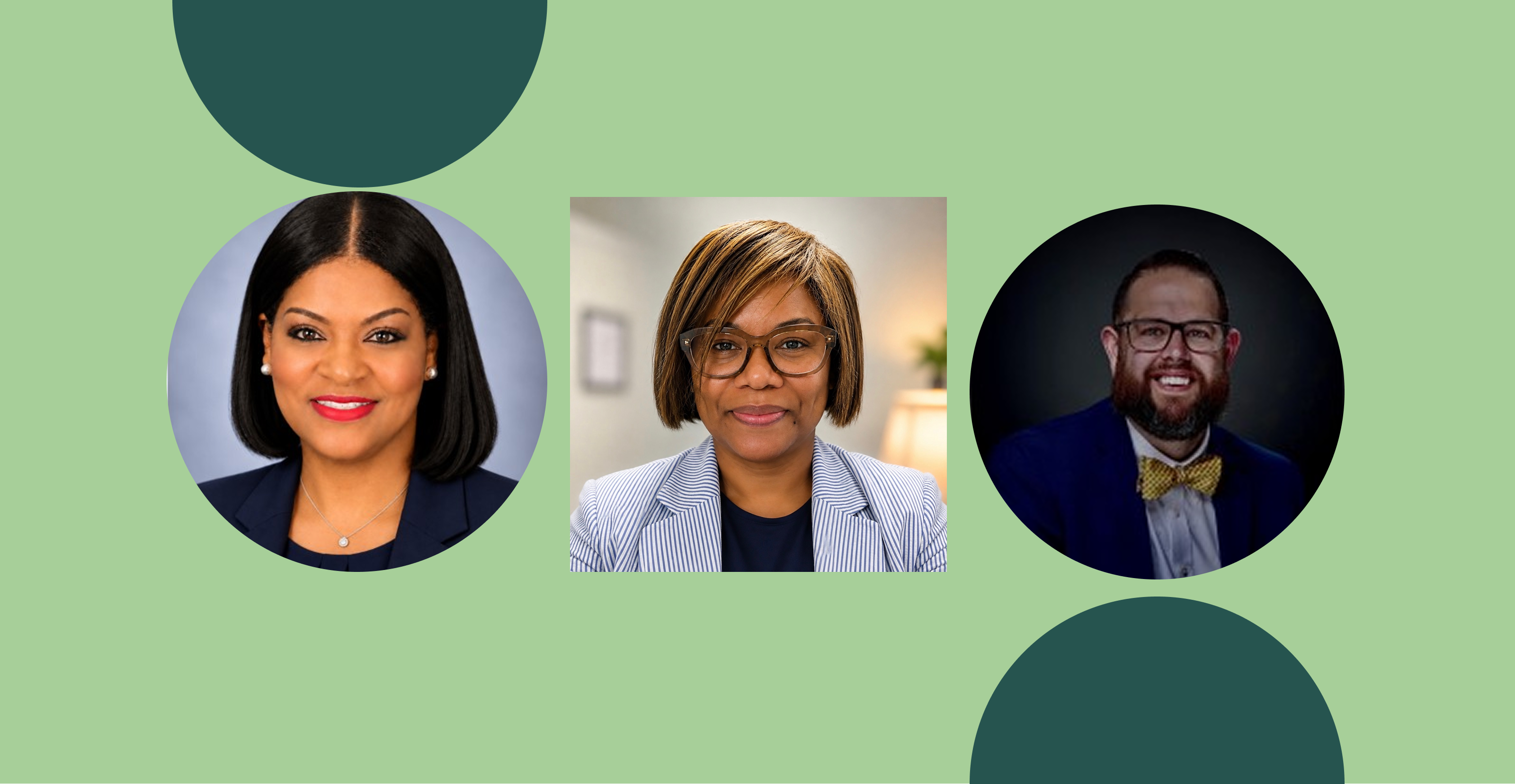
To explore the ways in which we can better look after ourselves and each other, Jillian Kelton, Cartwheel’s Director of Learning and Engagement, invited Dr. Barbara Mullen, Superintendent of Rush-Henrietta Central School District in New York, Dr. Wenimo Okoya, founder of the Healing Schools Project, and Dr. Juliana Chen, Chief Medical Officer at Cartwheel, to an interactive discussion.
In addition to Cartwheel’s new downloadable resource, Supporting the Supporters: A Guide to Navigating Stress and Burnout, we’ve compiled some of the key takeaways from the webinar.
A “Healing Centered” Approach
Ten years ago, Dr. Mullen wrote a book called Secure Your Oxygen Mask First: Strategies to Prevent Burnout in Special Education Practitioners. “It’s actually crazy that this is still a timely conversation,” Dr. Mullen shared. Today, the average tenure for a superintendent, especially if they are a Black woman, is around 18 months. And over half of all teachers, educational leaders, and superintendents report feeling stressed or burned out.
“You really don't get a lot of time to come in and do much of anything before you might actually incur a lot of harm in the role and then exit,” she said.
Dr. Mullen takes a healing-centered approach to leadership through “authentic, genuine support.” That includes giving her staff more agency so they’re not feeling so “hopeless and helpless” that they no longer want to serve their community.
"I needed to help my team understand that I hear them—I know they feel a lack of agency in some decisions, and I'm here to listen. More than that, I want to be genuinely curious: where are the authentic points of agency where I can step back and share power?"
“We see so much friction as schools take on more and more, not just with the learning and the academics, but the mental health and emotional needs of students—there’s so much pressure,” Dr. Chen added. “We have to think about how we can better support each other, and better support ourselves in doing that work.”
Recognizing Burnout
A small amount of stress or fatigue is normal, Dr. Chen shared. Teaching and counseling are hard. While some problems are systemic, and therefore much bigger than the individual, recognizing when we don’t feel good goes a long way.
“There is an absolute difference between expected levels of stress, higher levels of stress, and burnout—and burnout does not happen overnight, it’s a cumulative effect.” Because it’s a slow process, we’ve got time to think about things that we can do differently.
Burnout warning signs to look for:
- Low motivation
- Low productivity
- Loss of enjoyment
- Feeling like you’re on autopilot
“A metaphor that resonates with me is the idea of monitoring your water level. Imagine you're in the ocean—where is the water? Many of us feel like it's at our chin or mouth, constantly on the edge of drowning. Can we lower the water from our mouth to our chin, from our chin to our shoulders? Even small shifts can make a huge difference,” Dr. Chen shared.
Healing the Healers
Through her Healing Schools Project, Dr. Okoya trained thousands of educators about the trauma that young people experience before she realized that teachers don’t just need to have empathy for their students—they have their own healing to do, too.
She shared, “We need to take care of teachers, not just for students, but because their humanity matters, they as people matter. [School staff] deserve to be treated with respect and dignity, and it also helps them to show up for their students better.”
At Rush-Henrietta, Dr. Mullen has hired a director of equity and wellness, the EAP offering is flexible (“Far be it from us to say, ‘That’s great! You've had your six sessions, you should be good by now,’” she noted), and a new Leadership Lab makes space for staff to find joy and purpose.
“I would love to see more opportunities for the mental health component. Especially for folks who are not quite in crisis, we don't want them to get to the point where it spirals,” she shared.
But at the end of the day, for many districts, there just aren’t enough helping hands.
“It’s important to get into the weeds of your service delivery,” Dr. Mullen advises. “What's the master schedule looking like? Do you need more supports? Do you need external partners like Cartwheel to come in to support staff as well as students?”
Prevention helps preserve resources, too. “Whether it's a learning problem, a mental health issue, emotional behavior … you want to identify things as early as possible. That will actually decrease a school districts’ need for resources and services down the road,” Dr. Chen shared.
Building Resilience
“Schools are like soup. We invest a lot in the ingredients that we put into the soup like programs and initiatives and those change constantly,” shared Dr. Okoya. “But we don’t focus on the broth. And the broth is the culture, how we all come together. Without good broth, soup does not taste good. We need to do the broth work.”
“Resilience is not just you doing it yourself. That's why I actually don't use the word ‘self-care’ very much. We talk about community care in our work because it is about us caring for each other, and within community care is self-care, right?”
Dr. Okoya helps schools and districts identify the spaces that already exist—staff meetings, professional development, student advisory bodies—with a view to infusing well-being and retention into their foundations. “Tier 1 support often goes unaddressed, and resources end up going to Tier 2. How can we shift that conversation? People need to recognize that while clinical mental health support is essential, it's just one piece of the puzzle."
Cartwheel’s latest resource, Supporting the Supporters: a Guide to Navigating Stress and Burnout, aims to give educators some simple, practical tools to support their well-being and school culture. “We can’t stop stress and burnout from happening altogether, but in small ways, we can reduce stress, and maybe decrease the risk,” Dr. Chen shared. “You make a lesson plan for your kids, but can you make a well-being plan for yourself?”
Here are some self-care basics:
- Set boundaries around work and home time
- Take a five-minute walk around the school building
- Connect with a colleague you trust
- Prioritize quality sleep
- Eat at least one healthy meal each day
“Most districts, I think, will have an EAP or some equivalent. Some districts partner with Cartwheel, and we offer staff therapy,” Dr Chen shared. “If your school has a local community partner—a wellness clinic, mental health clinic, whatever it may be—I just encourage you to take advantage of it. Because you can't pour from an empty cup.”
One More Thing...
We’d love to know what wellness routines have made a difference in your life. Tell us what works for you when it's time to step back, reflect, and recharge, and we'll collect the responses and share them on our website soon. Together, we can support each other to stay mentally healthy.
Here are some tips other educators have already shared with us:
- “I compartmentalize my self care into four parts: dependencies, stepping stones, barriers, and commitment. Essentially, I ask myself if I am depending on my routines, resources, people. What are smaller steps I need to take to reach my wellness? What barriers am I creating or running into? How committed am I?”
- “I journal upon reflecting on my 3-daily word workbooks, each that have a different spin and two rooted in faith, that keep me aligned.”
- “I always make sure I have 2-3 people that I can call that provide me some semblance of balance when defcon 10 takes place. These people know they are point people and I am also theirs.”
- “Ample sleep, healthy eating, and grave attempts of hydration, are not always maintained but daily reattempted.”
- “Listen to your regular breathing until you notice your heartbeat. Focus on it.”