Resources

/ Guides

When You’re Concerned About Vaping

Understanding vaping and how to respond with support.

Discovering that your child may be vaping can bring up a lot of emotions. You may feel worried, disappointed, or unsure what to do next. It’s important to take vaping seriously, and it’s also important not to panic. How you respond can have a big impact on whether your child feels comfortable talking openly about what’s going on and accepting support.

This guide walks through what you might be noticing, what it might mean, what helps at home, a “Try This Tonight” starter for your first conversation, and when to seek extra support. If you want to start earlier conversations, see the companion guide, Talking with Your Child About Vaping.

‍

Free PDF guide · 4 pages — Cover of Cartwheel’s parent guide When You’re Concerned About Vaping

A preview of the guide. Complete the form to download the full guide.

Frequently asked questions

Should my child be punished for vaping?

Consequences may be appropriate in some situations, but conversation, support, and understanding are often more effective than punishment alone. If your child is worried about getting in trouble, they may be less likely to talk openly about what’s happening or ask for help. The goal is to address the behavior while keeping communication open.

Why is my child vaping?

Young people vape for many different reasons. Some are curious. Some are influenced by friends or social situations. Some use vaping to cope with stress, anxiety, or difficult emotions. Over time, some young people may also develop nicotine dependence. In other cases, vaping may be connected to broader emotional or mental health challenges. Understanding what role vaping is playing in your child’s life can help guide you toward the most helpful response.

When should a parent seek additional support?

A parent or caregiver should seek additional support when:

  • Your child is vaping regularly.
  • They are having difficulty stopping.
  • Vaping seems connected to stress, anxiety, or emotional concerns.
  • Your child is struggling with mood, anxiety, or coping in other areas of life.
  • You feel stuck or unsure how to help.

Support from your child’s healthcare provider, school, or mental health professional can help you better understand what is happening and identify next steps.


‍

Additional resources on this topic

Parent guide

Talking with Your Child About Vaping

Helping your child navigate vaping, nicotine, and peer pressure. Learn how to start early, lead with curiosity, and keep the conversation going over time.

Download the guide

Family guide

Understanding Vaping: What Families Should Know

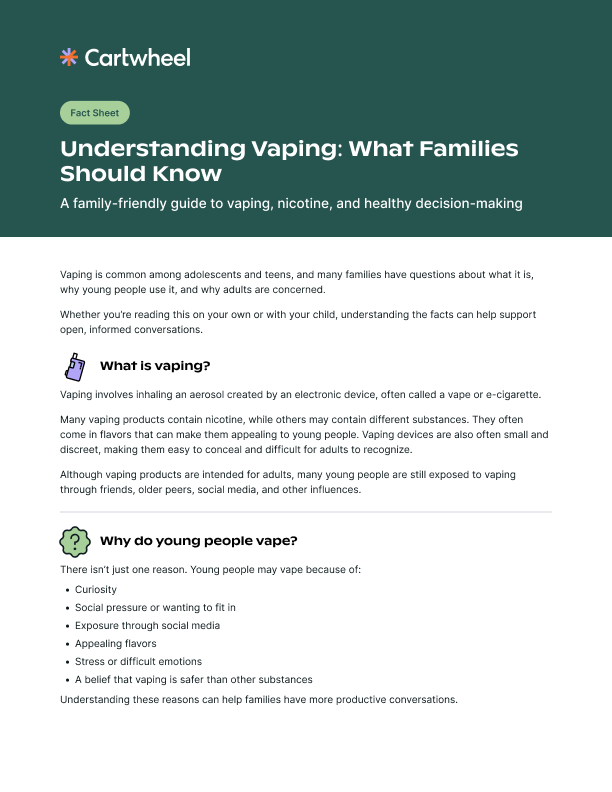
A family-friendly guide to vaping, nicotine, and healthy decision-making. Get the facts, bust common myths, and find questions to talk about together.

Download the guide

Webinar on demand

Talking to Teens About Substance Use: What Parents Should Know

Hear Amy McCarthy Baluch, LICSW, Director of Social Work for Adolescent Substance Use and Addiction at Boston Children’s Hospital, on how to approach tough conversations about substance use in a way that builds trust. Learn what parents can watch for, how to talk with middle schoolers and high schoolers, and what to do if you discover your child is using.

Watch the webinar

‍

When You’re Concerned About Vaping

Resources

When You’re Concerned About Vaping

October 23, 2026

Understanding vaping and how to respond with support.

In this Article

Speakers
Reviewed By

Get the Cartwheel newsletter

More like this