New York's phone-free school year has already changed the sound of school hallways: lunchrooms are loud again, and students are making more eye contact and conversation than they were a year ago. A phone ban creates the conditions for connection but it doesn't create the connection itself. The districts seeing the deepest gains in attendance, behavior, and student wellbeing are the ones that built something to meet that opening: family partnerships, mental health pathways, and community partnerships that reach beyond the school building itself.
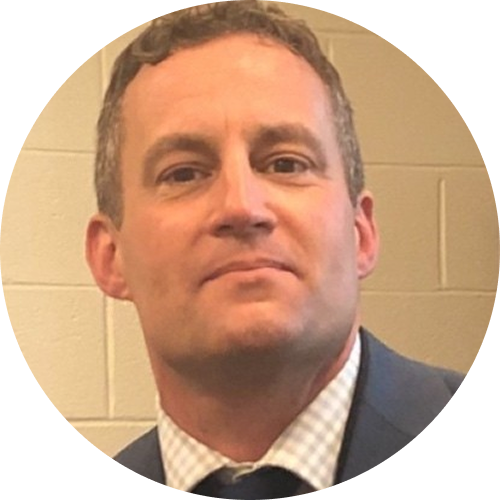
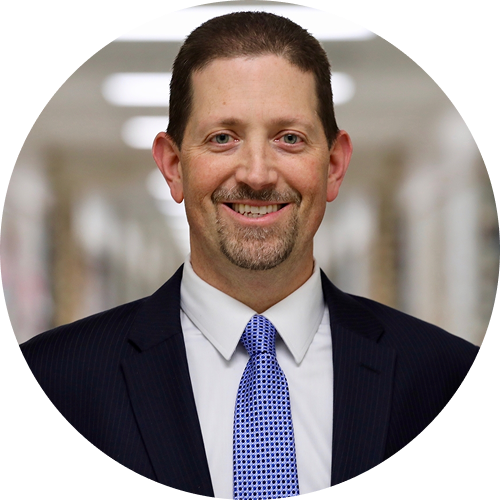
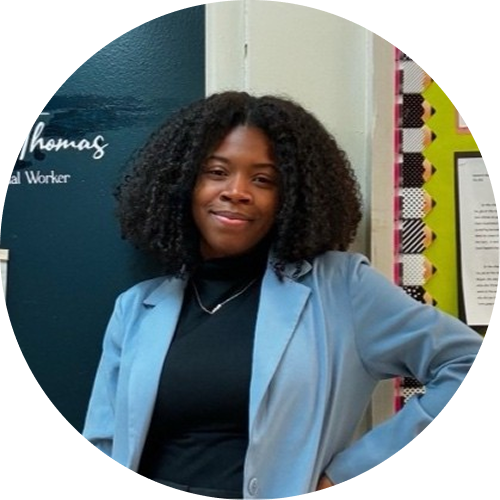
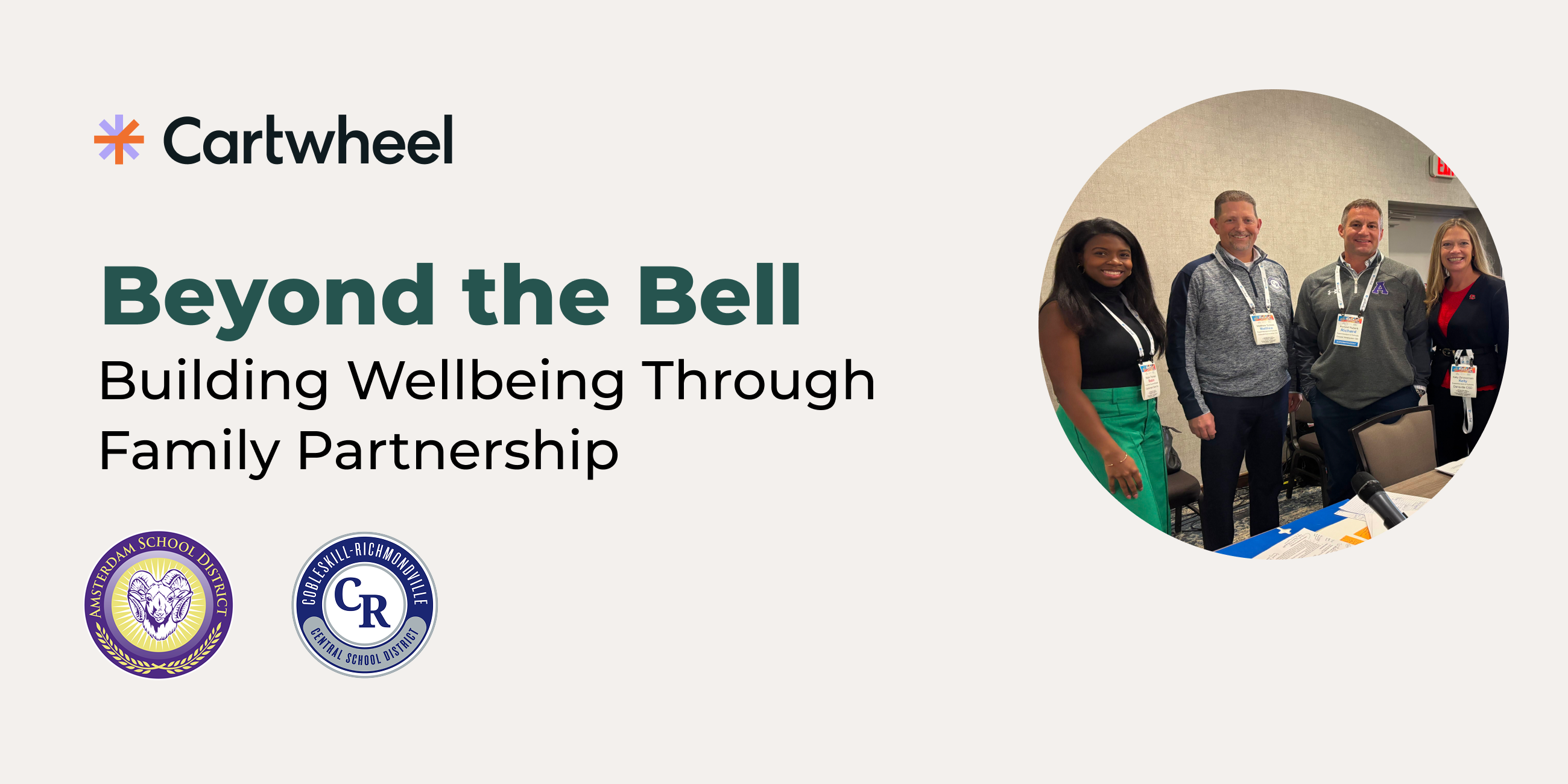
At the NYSCOSS Fall Leadership Summit in Saratoga Springs, New York, held September 27-29, 2026, two New York superintendents shared exactly what that infrastructure looks like in their districts. Rich Ruberti, Superintendent of Greater Amsterdam School District, and Matt Sickles, Superintendent of Cobleskill-Richmondville Central School District, joined a conversation moderated by Robin Thomas of Cartwheel's New York partnership team.
What Family Engagement Looks Like on the Ground in Two New York Districts
Ruberti's district serves roughly 4,000 students, 82% of whom are economically disadvantaged. Ruberti became superintendent as the district reopened from COVID-era closures, and the first job was rebuilding trust with families and getting kids back into the building. School isn't just instruction, as Ruberti described it: it's often a consistent routine, a hot meal, and a warm place to be, a role that matters even more in a district like his. During that stretch, referrals to outside agencies like Child Protective Services nearly disappeared, not because things had improved at home, but because the adults who would normally notice a child in trouble weren't seeing kids at all. That shaped what came next: Greater Amsterdam added several community partnerships, including Catholic Charities and Creative Connections, an organization founded after a tragedy in Amsterdam about 15 years ago that now runs an after-school space with tutoring, meals, and a recording studio.
The district also created a Family Advocate role, deliberately not an administrator position, to support family needs. The advocate handles the practical barriers standing between a family and school: gas cards, translation, clothing, McKinney-Vento housing support, even helping one family get a mattress. "It's not just a one-way communication," Ruberti said of the role. The Family Advocate really does serve as the point of contact for some families who don't want to go to administration first, and that relationship runs both ways: the advocate also feeds back to the district on what families need and how to support them, shaping things like backpack drives and holiday gift coordination.
Sickles came to Cobleskill-Richmondville in September 2022, into a rural district of about 1,470 students spread across 182 square miles. His starting point looked different: partnerships around food insecurity were already strong, but trust between families and staff had frayed. "One of the greatest... enemies of family partnership is blame," Sickles said, describing how fear of being blamed kept both staff and families from picking up the phone. His district has worked to rebuild that habit directly, including a recurring "parent engagement blitz" that tracks how many positive, non-crisis calls teachers make home.
Meeting Students' Needs That Show Up Outside the Classroom
The district still struggled with chronic absenteeism. Elementary rates have come down to the low 30s, but secondary schools remain harder to move. High family transience makes that harder: a district study found that more than 40% of students who start kindergarten in Greater Amsterdam don't finish there. The response included running buses throughout the school day instead of a single morning pickup, lowering the busing distance threshold, and, in one middle school's case, an attendance-based dance nicknamed the "Attend-Dance" that drew over 250 students. On the mental health side, the district's Cartwheel partnership has grown from 50 students in its first year to 100 students this year receiving after-school counseling support. Cartwheel's School Avoidance Program is built to address the root causes behind numbers like these.
Sickles described a related but distinct pattern: a spike in homeschooling that began during the pandemic and never fully reversed, often rooted in anxiety, depression, or school avoidance rather than academics. He shared the story of an actively involved mom of a middle schooler who had spent months struggling to get her son out of bed and to class on time. She had reached the point of giving up and had already submitted paperwork to withdraw him into homeschooling when Sickles called her. For the first time, he had a mental health resource to offer that addressed the root cause of her son's avoidance, not just the attendance problem on the surface. That student stayed enrolled and is now in tenth grade, with attendance that isn’t perfect but is meaningfully better.
Building Trust in Two Very Different Communities
For Ruberti, trust took shape through the Family Advocate role: someone families could call directly, rather than an administrator they might associate with discipline or a referral to CPS. "We're not going to call the authorities," Ruberti said of the district's approach to chronic absenteeism. New York has shifted its approach to truancy and educational neglect statewide toward diversion and support rather than family court intervention, so leading with authority accomplishes little beyond damaging trust.
For Sickles, the barriers were both geography and privacy at once. County mental health services exist, but require an intake meeting at an office outside his district, a real obstacle in a community large enough in land area that transportation is difficult, and small enough socially that families worry about being seen walking into that building. Telehealth solved both problems together. "If you're just shrugging, saying we don't have anything for you, how do you build that trust?" Sickles said. His counselors have already made several referrals through the partnership, including one family that had never engaged with support before.
The Governance and Budget Decisions Behind the Infrastructure
Trust keeps families engaged, but it doesn't keep a program funded. Ruberti credited Capital Region BOCES grant writers whose work awarded his district a federal mental health grant that helped fund the Cartwheel partnership alongside a mental health coordinator and behavior intervention staff. He also pointed to auditing existing licenses and vendor programs for actual usage, freeing up operational funds without reducing services.
Sickles took a different route. The opportunity to partner with Cartwheel came up mid-year, outside his district's budget cycle. His team believed providing 25 referrals to Cartwheel would benefit students and families so they made the case to Cobleskill-Richmondville's Education Foundation, who stepped up and made a one-time contribution to bridge the gap for year one services, with BOCES aid covering the ongoing cost after year one. "I care who gets the credit for funding our Cartwheel partnership. They made it possible," Sickles said of the foundation's board.
Both superintendents emphasized bringing counselors into the decision before it ever reached the board. Sickles described sitting in a room with his counseling staff and the Cartwheel team, expecting some resistance to what could look like a replacement for their roles. Instead, "by the end they were turning to me and saying, you have to get us this." Ruberti reported that among the roughly 50 students actively participating in Cartwheel last year, chronic absenteeism dropped by 44%.
What This Means for Districts Tackling Chronic Absenteeism and Family Engagement
For New York superintendents working through similar attendance and access challenges, this conversation points to a few clear considerations. Family engagement functions as a wellbeing strategy, not just a communication function. The infrastructure a district builds matters more than any single policy. And expanding access doesn't have to mean adding headcount or waiting for ideal conditions: both Amsterdam and Cobleskill-Richmondville found their own paths to it, shaped by very different budgets, boards, and communities.
For more on how districts are building sustainable, board-supported mental health partnerships, Cartwheel's case studies page includes several examples like Amsterdam's and Cobleskill-Richmondville's. Families in partner districts can also find guidance through Cartwheel's family resource hub including our free monthly webinar series.
Learn More About Care Programs for New York School Leaders
Districts across New York are building stronger partnerships with families, much like Ruberti and Sickles described, not all at once, and not without some difficult budget conversations. If you're evaluating whether a partnership like this fits your district, learn more about Cartwheel's care programs for New York school leaders.