For SchoolsFor ParentsAbous UsContacts

Districts see up to 62% fewer absences with our School Avoidance Program

Learn More

For Districts
For DistrictsOur PortalCase StudiesArizonaGeorgia
For Families
Services
Clinical ServicesSchool Avoidance Program
Resources
About Us
About UsIn the NewsWall of Love
Log inSchedule demo

School Avoidance Program

Students with Mental Health Needs Miss Twice as Many Days of School

Cartwheel's specialized School Avoidance Program helps students address the challenges at the root of chronic absenteeism—so they can confidently return to school.


Talk With Our Team

A Mental Health Solution That Helps Students Return to School

Evidence-based care designed specifically for students struggling with school avoidance.

Regular therapy & family sessions from licensed clinicians with specialized training.

Integrated psychiatric support when students might benefit from medication evaluation.

Ongoing collaboration with schools to ensure consistent strategies across settings.

The Measurable Impact of
Reducing Chronic Absenteeism

Use your district’s enrollment and chronic absenteeism rate to estimate how supporting students with
school avoidance can reduce missed days, increase instructional time, and improve attendance outcomes.

Impact Calculator

Number of enrolled students
Use the slider to enter your district's total student enrollment.
20,000 students
0 150,000+
% of students who are chronically absent
Use the slider to enter the % of students who miss 10% or more of the school year for any reason.
25%
0 50%

Estimates are illustrative and based on district-provided data and observed outcomes from schools using Cartwheel.

Estimated Impact

School building icon
↓ 0
Fewer chronically absent students
Calendar icon
↓ 0
Fewer days missed per year
Apple and book icon
↑ 0
Increase in instructional hours per year

Talk with our team to review your results and learn how Cartwheel partners with districts to support students struggling with school avoidance.

Learn More about Cartwheel's School Avoidance Program

See how Cartwheel's integrated mental health support helps improve attendance, behavior, and academic outcomes.

↓ XXX
Fewer chronically
absent students
↓ XXX
Fewer missed
days per year
↑ XXX
Increase in instructional
hours per year

Real Results: Peoria Public Schools

Peoria Public Schools was facing rising chronic absenteeism and behavioral incidents, long waitlists for mental health services, transportation and language barriers, and school staff overwhelmed by frequent crises.

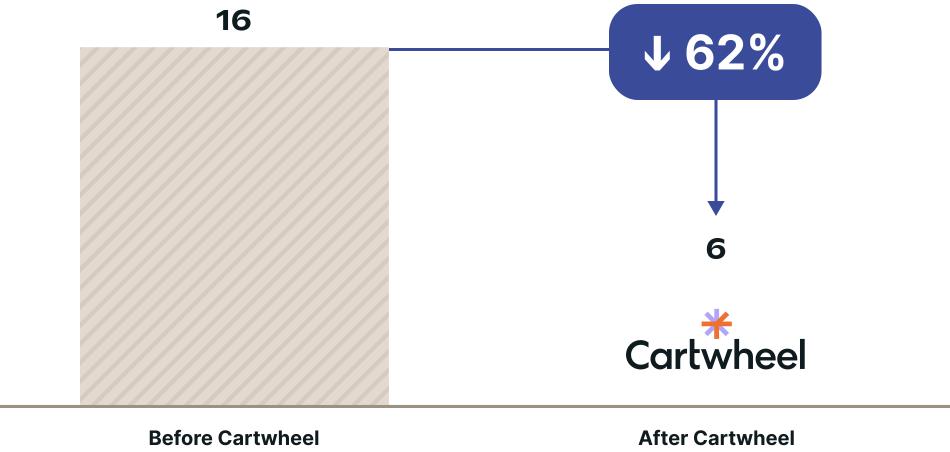
After partnering with Cartwheel, the district saw a 62% reduction in absences per student, along with decreases in suspensions and symptoms of depression and anxiety.

Read the Case Study
Peoria, Illinois
12,600 students across 32 schools
79% free/reduced lunch
Comparison group: Students who did not receive Cartwheel services did not see improved attendance
Sample size: n=141 students who engaged in Cartwheel telehealth services in a 12,600 student urban district (79% free/reduced lunch) during the 2022-23, 2023-24, and 2024-25 school years. First bar shows the % of students receiving Cartwheel who were chronically absent in the year they were referred for services. For the same cohort, the second bar shows the % who were chronically absent in a subsequent school year. Chronic absenteeism is defined as missing 10 percent of school days within an academic year.

Absences per Student Before vs. After Cartwheel
↓ 44%
Reduction in
chronic absenteeism
↓ 68%
Fewer suspensions
↓ 90%
Reduction in depression/
anxiety symptoms

“Cartwheel has become a key part of our student support infrastructure, delivering measurable improvements in attendance and behavior, and positioning our schools as hubs of comprehensive wellness support.”


Dr. Alexander U. Ikejiaku
Associate Superintendent
Peoria Public Schools

Why This Matters for Districts

Most Mental Health Services Improve Symptoms—Not School Outcomes
Traditional telehealth addresses clinical symptoms but often misses the school-based challenges districts need help with most: attendance, behavior, and engagement.

‍Cartwheel's School Avoidance Program fills that gap. We deliver evidence-based care tailored to the real issues educators and families face, improving both clinical and educational outcomes—so students return to school consistently and confidently.

‍Districts see improvements in:

Attendance rates & chronic absenteeism metrics

Classroom engagement & instructional time

Behavioral incidents & disciplinary referrals

Family engagement & follow-through with interventions

“Cartwheel's School Avoidance Program speaks directly to the challenges families face every day, making it easier for them to raise their hands for help and follow through.”

Jillian Kelton, M.Ed
Director of District Engagement, Cartwheel and Former Chief of Student Support, Boston Public Schools

What the Program Includes

Specialized care designed to reduce school avoidance and improve attendance.

1:1 therapy with clinicians trained in school avoidance

1:1 parent guidance sessions & optional skill-building groups

School Refusal Assessment Scale (SRAS) to identify the “why” behind avoidance

Psychiatric evaluations and medication management when appropriate

Ongoing school collaboration for consistent strategies across settings

Telehealth from home (8am–8pm + weekends)—no transportation barriers

This program is the right fit for:

Students who:
  • Experience difficulty getting to school—physical complaints, emotional meltdowns, refusing to leave home
  • Have anxiety, depression, or trauma contributing to chronic absences
  • Want to attend school but can't overcome the emotional barriers
Families who:
  • Are ready to participate regularly in telehealth sessions
  • Seek guidance on supporting their child at home
  • Are committed to being active partners in treatment

What Families and Schools Are Saying

“Since partnering with Cartwheel, we have observed a noticeable shift away from externalizing behaviors. Aggression against staff has decreased.”

Dr. Ann Bond, Assistant Superintendent of Student Services, Peoria Public Schools

“Cartwheel has broken down cultural barriers and shows families that we hear you, and we are here to support and give you the tools you need to be successful.”

Bria Scott, School Social Worker, Peoria Public Schools

“Cartwheel understood what was really behind why our child wouldn’t go to school. Our mornings are so much easier now.”

Parent

“I'll say [our] number one [issue] would be school avoidance. And that's where I think Cartwheel can really be so beneficial because that's not something that our school-based counselors are really addressing.”

Karri Isidoro, Psychologist, Danvers Public Schools

Frequently Asked Questions

Common questions from districts considering specialized school-avoidance support.
How is specialized school avoidance treatment different from school counseling?

School counselors often support students with mild or emerging school avoidance. But more persistent or severe cases typically require specialized, evidence-based treatment that goes beyond what school teams can reasonably provide alone. Cartwheel clinicians use school-refusal interventions, structured assessment tools, intensive family involvement, and coordinated care with school staff—expanding a district’s capacity to support students with more complex needs.

How is school avoidance different from truancy?

School avoidance is driven by mental health barriers—such as anxiety, depression, or fear—rather than willful defiance. Some students may want to attend school but feel unable to, while others feel unsure or reluctant because of overwhelming emotional distress. Unlike truancy, school avoidance requires coordinated clinical intervention, not punitive measures.

How quickly can students begin receiving support?

Students typically begin therapy within 7–10 days of referral after completing an initial assessment. Because delayed intervention worsens avoidance, rapid access is a core component of the program.

Can Cartwheel support students across the full spectrum of school-avoidance needs, including school refusal?

Yes. Cartwheel treats the full spectrum of school avoidance—from early signs of school anxiety to more persistent avoidance or repeated school refusal. Early intervention often prevents patterns from becoming chronic, and many districts face more students needing support than school teams can manage alone. By providing rapid-access clinical care, family guidance, and coordination with school staff, Cartwheel expands district capacity and helps students engage sooner.

Will teletherapy work for school-avoidant students?

Yes—teletherapy often increases engagement for school-avoidant students. Meeting virtually removes transportation barriers, reduces anxiety that interferes with participation, and allows flexible scheduling, including evenings and weekends, when families can join sessions. When students feel too overwhelmed to participate, Cartwheel clinicians work directly with parents and caregivers to build routines, lower distress, and gradually help students engage in care.

How do you measure whether the program is working?

We track both clinical outcomes (using PHQ-9/GAD-7 for depression and anxiety) and functional outcomes (attendance and participation data). Districts consistently see measurable improvements in mental health symptoms and school attendance.

What if a student may need medication?

If appropriate, students can meet with a Cartwheel child psychiatrist or psychiatric nurse practitioner for evaluation. When clinically indicated, medication management can also be initiated within the program. Psychiatric care is fully integrated, ensuring continuity between therapy, family support, and school collaboration.

What is expected of families?

Family involvement is essential for addressing school avoidance. Parents participate in regular guidance sessions where they learn practical strategies, co-create routines, and receive support to maintain progress between sessions.

How much coordination is required from school staff?

Cartwheel manages nearly all aspects of care—including scheduling, family communication, progress monitoring, and care coordination. School teams join brief check-ins to align on strategies, but we handle the ongoing work. The program is designed to reduce staff burden while improving student outcomes.

What kinds of students benefit most from the program?

Students struggling with anxiety, depression, emotional or behavioral challenges, or repeated school refusal typically show the strongest gains. The program also supports students transitioning back after hospitalization or prolonged absences.

How does the program work with IEP or 504 supports?

Cartwheel’s clinical care complements a student’s existing IEP or 504 plan. Clinicians coordinate with school teams to align strategies, reinforce accommodations, and share progress updates. This ensures students receive consistent support across settings while maintaining compliance with special education requirements.

Is this financially sustainable for districts?

Yes. Cartwheel’s clinical services are funded through insurance—$0 for Medicaid families and in-network with major plans—while districts invest in coordination and access. This makes the model scalable, equitable, and cost-effective.

Ready to Address Chronic Absenteeism in Your District?

See how Cartwheel’s integrated mental health support helps improve attendance, behavior, and academic outcomes.
Talk with Our Team

Are you a school administrator and want to access our portal?

Log in

Notice of Privacy Practices

Terms of Use and Agreements

Privacy Policy

700 Massachusetts Ave 3rd Floor

Cambridge, MA 02139

+1 888-500-2067

info@cartwheelcare.org

Health care services are provided by Cartwheel Health Services P.C., Cartwheel Health Services New Jersey P.C., and affiliated medical practices, which are professional corporations doing business as Cartwheel.

© 2025 Cartwheel Care Inc.