

School Avoidance Program
Students with Mental Health Needs Miss Twice as Many Days of School
Cartwheel's specialized School Avoidance Program helps students address the challenges at the root of chronic absenteeism—so they can confidently return to school.

A Mental Health Solution That Helps Students Return to School

Evidence-based care designed specifically for students struggling with school avoidance.

Regular therapy & family sessions from licensed clinicians with specialized training.
.svg)
Integrated psychiatric support when students might benefit from medication evaluation.

Ongoing collaboration with schools to ensure consistent strategies across settings.
The Measurable Impact of
Reducing Chronic Absenteeism
school avoidance can reduce missed days, increase instructional time, and improve attendance outcomes.
Impact Calculator
Estimates are illustrative and based on district-provided data and observed outcomes from schools using Cartwheel.
Estimated Impact



Talk with our team to review your results and learn how Cartwheel partners with districts to support students struggling with school avoidance.
Learn More about Cartwheel's School Avoidance Program
See how Cartwheel's integrated mental health support helps improve attendance, behavior, and academic outcomes.
absent students
days per year
hours per year
Real Results: Peoria Public Schools
Peoria Public Schools was facing rising chronic absenteeism and behavioral incidents, long waitlists for mental health services, transportation and language barriers, and school staff overwhelmed by frequent crises.
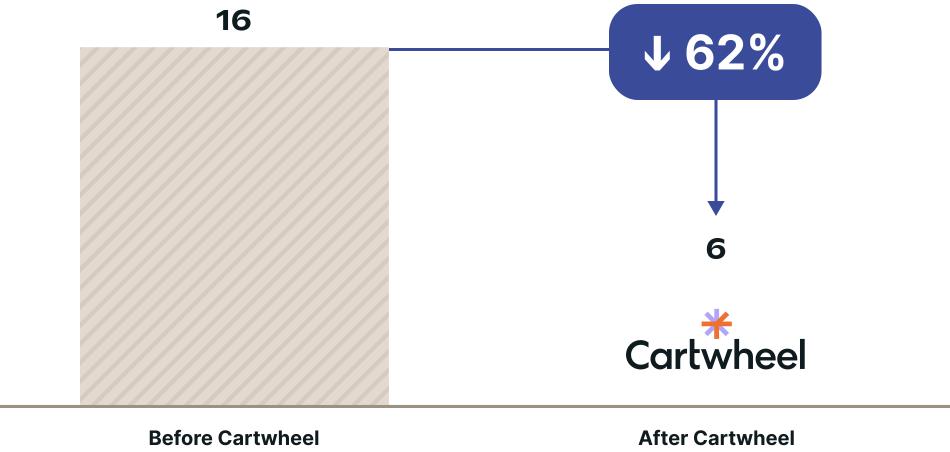
After partnering with Cartwheel, the district saw a 62% reduction in absences per student, along with decreases in suspensions and symptoms of depression and anxiety.

Absences per Student Before vs. After Cartwheel
chronic absenteeism
anxiety symptoms
“Cartwheel has become a key part of our student support infrastructure, delivering measurable improvements in attendance and behavior, and positioning our schools as hubs of comprehensive wellness support.”


Why This Matters for Districts
Cartwheel's School Avoidance Program fills that gap. We deliver evidence-based care tailored to the real issues educators and families face, improving both clinical and educational outcomes—so students return to school consistently and confidently.
Districts see improvements in:
Attendance rates & chronic absenteeism metrics
Classroom engagement & instructional time

Behavioral incidents & disciplinary referrals

Family engagement & follow-through with interventions
“Cartwheel's School Avoidance Program speaks directly to the challenges families face every day, making it easier for them to raise their hands for help and follow through.”


What the Program Includes
1:1 therapy with clinicians trained in school avoidance
1:1 parent guidance sessions & optional skill-building groups
School Refusal Assessment Scale (SRAS) to identify the “why” behind avoidance

Psychiatric evaluations and medication management when appropriate

Ongoing school collaboration for consistent strategies across settings

Telehealth from home (8am–8pm + weekends)—no transportation barriers

This program is the right fit for:
.svg)
- Experience difficulty getting to school—physical complaints, emotional meltdowns, refusing to leave home
- Have anxiety, depression, or trauma contributing to chronic absences
- Want to attend school but can't overcome the emotional barriers

- Are ready to participate regularly in telehealth sessions
- Seek guidance on supporting their child at home
- Are committed to being active partners in treatment
Frequently Asked Questions

How is specialized school avoidance treatment different from school counseling?
How is school avoidance different from truancy?
How quickly can students begin receiving support?
Can Cartwheel support students across the full spectrum of school-avoidance needs, including school refusal?
Will teletherapy work for school-avoidant students?
How do you measure whether the program is working?
What if a student may need medication?
What is expected of families?
How much coordination is required from school staff?
What kinds of students benefit most from the program?
How does the program work with IEP or 504 supports?
Is this financially sustainable for districts?
