Picture two eighth graders. Sarah's grades are slipping in reading. Within weeks, she's flagged through MTSS, given a diagnostic, matched with interventions, and tracked across progress monitoring. Every step is documented. The system kicks in because the system exists.
Marcus is also in eighth grade. He's not behind in reading — he's struggling with anxiety. It's showing up as declining attendance, withdrawal in class, and falling grades. His challenges are affecting his learning just as much as Sarah's are, but his needs often go unnoticed until they reach a crisis point. By the time someone acts, he's chronically absent, failing classes, and his graduation timeline is at risk. When he finally gets a referral, it goes to an outside counselor, with no data sharing back to the school, no systematic adjustment, and minimal tracking.
Two students. Same school. Two completely different systems behind them.
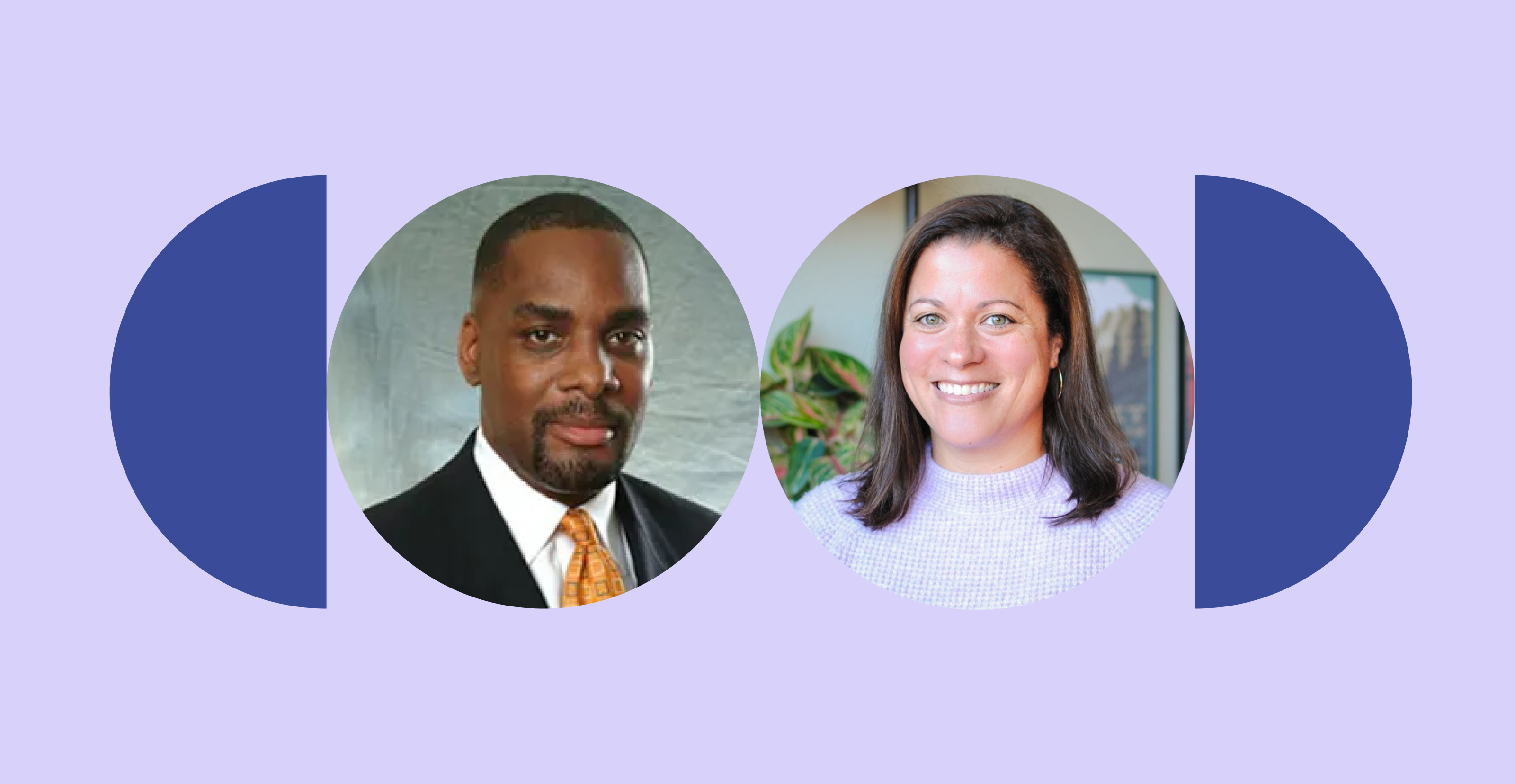
That gap is the subject of The Double Standard, a new article co-authored by Dr. Adrian Talley, Superintendent of Indian Prairie School District 204 in Illinois, and Jillian Kelton, M.Ed., Director of District Engagement at Cartwheel and former Chief of Student Support at Boston Public Schools. In a recent webinar, they walked district leaders through why the gap exists, how to begin closing it, and what becomes possible when mental health support is built with the same rigor districts already apply to academics.
The data is already there
Dr. Talley made the point that schools are full of data: attendance records, behavior referrals, nurse visits, grade trends, parent contact logs. The challenge isn't collecting more. It's reading what's already on the page.
When a student's attendance starts dropping after a stretch of consistency, when behavior shifts noticeably, when grades fall sharply from a steady baseline — those are reliable signals. Dr. Talley shared an example from Indian Prairie of a student whose attendance began slipping. When the team reached out, they learned she was experiencing anxiety about whether she could continue to succeed. With therapy in place, her attendance recovered and her grades followed.
Jillian described a similar pattern from her time at Boston Public Schools, where 48,000 students across 118 schools generated more than enough data. The shift wasn't collecting more of it, it was learning to read it together. Frequent nurse visits, declining attendance, and escalating behaviors were often the same student showing the same need across five different systems. Once clinical partners began sharing progress data back to schools, counselors could see a student's care arc alongside their attendance, grades, and behavior trends in one place. That integration is what made early identification actionable.
Where districts get stuck
A few common blind spots emerge in this work, and both speakers returned to them throughout the conversation.
The first is treating a mental health referral as the end of the work. When a student is referred for reading support, no one assumes the referral itself is the intervention. Progress is monitored, assessments continue, and adjustments are made. The same standard belongs on the mental health side.
The second is not training the adults closest to students. Teachers, paraprofessionals, and other staff see students daily and are often the first to notice changes, but most haven't been trained to recognize early warning signs. Jillian described teachers as the "noticers" in a building — they don't need to be clinicians, but they need a way to flag a change and a system that responds. Mental Health First Aid and similar trainings are cost-effective and frequently underused. Dr. Talley shared that during his time in Prince George's County Public Schools, the district trained school secretaries, nurses, classroom teachers, and others through Mental Health First Aid as a starting point which was small, manageable, and expandable.
The third is trying to build alone. Dr. Talley pointed to the CDC's Whole School, Whole Community, Whole Child (WSCC) framework as a useful anchor. Schools play a role, but so do healthcare systems, community organizations, and family partners. In Indian Prairie, looking outward meant the district could connect a student to an outside therapist within two days of identifying need — a turnaround that eliminated one of the most common barriers families face.
What it looks like systematically
From Jillian's experience in Boston, three factors consistently separated schools that built integrated systems from those that stayed in crisis-response mode. The first is leadership commitment at the superintendent and building-leader level — naming mental health as core to academic outcomes, not adjacent to them. The second is an internal champion who owns the integration, often a Director of Student Services or Assistant Superintendent. The third is starting with the data already in hand: attendance, behavior, and academic performance, before any new screener is introduced.
For districts beginning to map this work to existing infrastructure, Cartwheel's guide to MTSS and student support walks through how mental health supports can sit inside the same tiered framework districts already use for academics.
How this connects to the metrics that matter
For superintendents, the case ladders directly into accountability. Chronic absenteeism is often a mental health and family engagement issue showing up on an attendance dashboard. Academic outcomes depend on students being well enough to engage. Dr. Talley shared that his district started with a single $500,000 grant from a local hospital and built from there — eventually securing roughly $4 million in additional funding and sharing the model with more than 20 other Illinois districts, each receiving grants of about $250,000 to replicate the approach.
The frameworks exist. The data exists. The partnerships exist. What changes outcomes is the decision to bring the same rigor to mental health that districts have long brought to reading and math.
Download the full article: The Double Standard: Why Student Support Deserves the Same Rigor as Academic Intervention