Two Districts Cut Chronic Absenteeism Nearly in Half—Here's How They Did It
Key takeaways from our conversation with district leaders from Peoria Public Schools, Salem Public Schools, and a clinical expert from The Brookline Center for Community Mental Health.
Chronic absenteeism is in every district strategic plan. But what's actually working to reverse it? In our recent info session, "Reversing Chronic Absenteeism," we brought together three leaders who are tackling this challenge head-on and seeing measurable results.
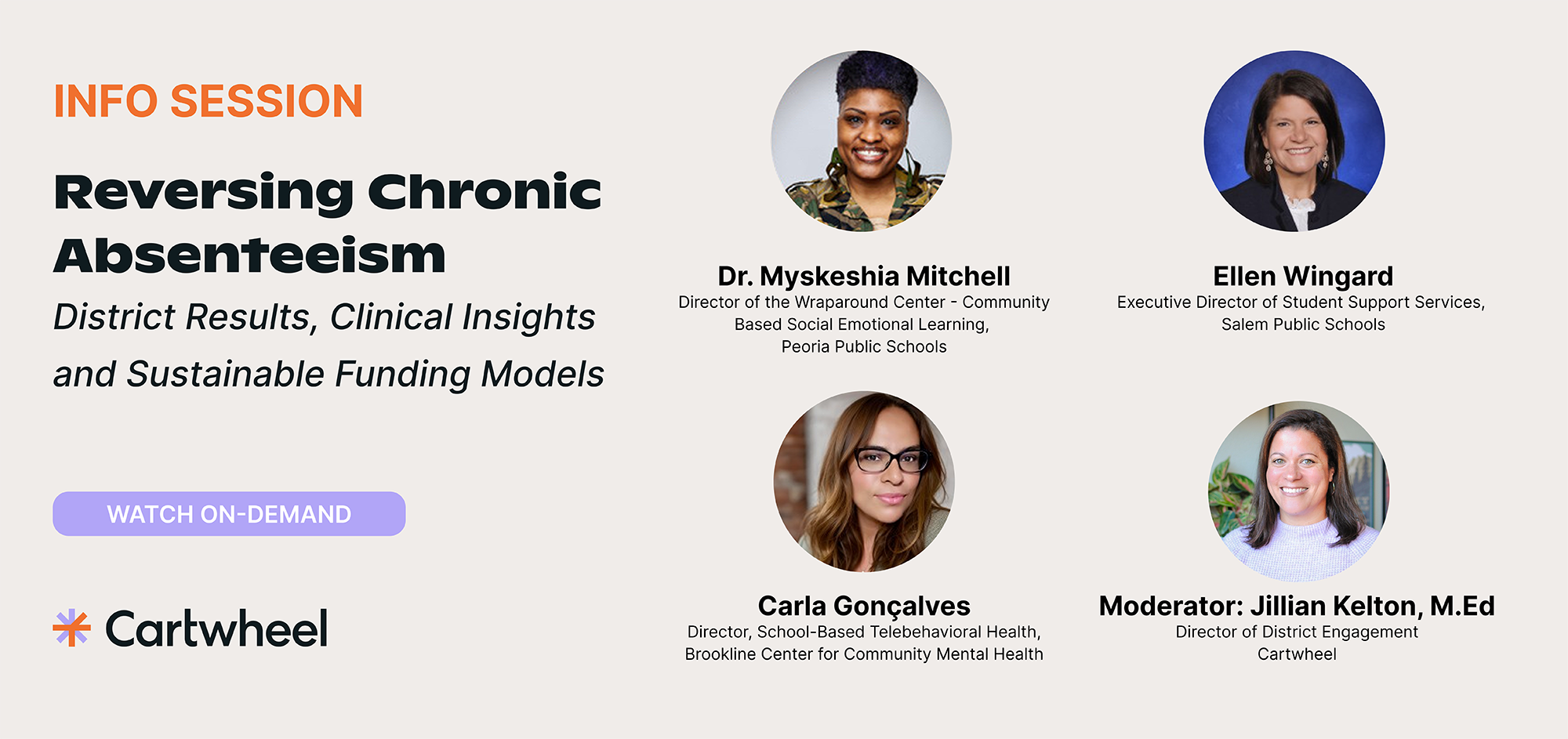
Featured Panelists:
- Dr. Myskeshia Mitchell, Director of the Wraparound Center – Community Based Social Emotional Learning, Peoria Public Schools (IL)
- Ellen Wingard, M.Ed., Executive Director of Student and Family Support Services, Salem Public Schools (MA)
- Carla Gonçalves, Director, Massachusetts School-Based Telebehavioral Health Pilot, The Brookline Center for Community Mental Health
- Jillian Kelton, M.Ed. (Moderator), Director of District Engagement, Cartwheel
The conversation confirmed what many district leaders already feel: traditional attendance interventions focus on symptoms rather than root causes. Without systematic clinical support for anxiety, depression, and school avoidance, districts struggle to move the needle on today's absenteeism crisis.
Why Traditional Attendance Approaches Aren't Working
Before the pandemic, districts were already struggling with chronic absenteeism. The pandemic didn't create the problem—it exposed and compounded it.
At Peoria Public Schools, chronic absenteeism had climbed to over 40% district-wide. Dr. Myskeshia Mitchell, Director of the Wraparound Center, described a familiar pattern: "We had mental health challenges, hospitalizations, childcare problems, custody issues, transportation—and our staff were doing what they could with phone calls, letters, and home visits. But students were still in crisis, still needing help, and appointment wait times were spanning months."
Salem Public Schools faced similar realities. Ellen Wingard, Executive Director of Student and Family Support Services, shared that even before the pandemic, 44% of high school students were chronically absent. "Students weren't just staying home to stay home," she explained. "They were battling chronic stressors, job losses, family losses, grief, and mental health challenges."
From a statewide perspective, Carla Gonçalves of The Brookline Center for Community Mental Health confirmed this isn't isolated to a few districts. Data from the Massachusetts School-Based Telebehavioral Health Pilot showed that students referred for services experienced higher rates of chronic absenteeism than the statewide average—nearly 40% compared to 24%—and were disproportionately from high-priority populations including low-income households, students with disabilities, and English learners.
The data tells the story: chronic absenteeism clusters where mental health barriers go unaddressed—anxiety, depression, and school avoidance that traditional interventions can't reach.
How School District Leaders Are Building Integrative Solutions to Solve Chronic Absenteeism
What made the difference for Peoria and Salem wasn't adding another program—it was finding a resource that integrated seamlessly with their existing student support systems, made services more accessible to families, and diversified their intervention options.
Peoria's Wraparound Center Model
Peoria established a one-stop resource hub where students and families can access therapeutic supports, community services, food, and other resources in one place. The partnership with Cartwheel added a resource that students and families could access through this hub, removing common barriers to mental health support like transportation, missed work days, and the ability to meet with a therapist during the school day or at home.
"Everyone who refers a student—the referrals come to me, and I'm very quick about the turnover process," Dr. Mitchell explained. "From referral to first conversation with Cartwheel, it's usually an average of three days. That's huge when families are sometimes playing phone tag for weeks."
Critically, the model was designed to support school counselors and social workers—not replace them. School staff remain the first line of contact because they know the students, while clinical partners, like Cartwheel, handle intensive therapeutic needs that go beyond school counselor scope.
Salem's Community-Wide Approach
Salem took a broader systems approach, building what Ellen called "a culture of attendance" that spans the entire district and community. This included creating school attendance teams organized around a relationship-first multi-tiered system of support, developing community partnerships with bilingual staff who could connect with Salem's diverse population, and establishing an attendance coalition with the YMCA, Boys and Girls Club, Housing Authority, and city officials.
"We really understood that what happened between 3 p.m. and 8 a.m. meant just as much, if not more, than what happened during the school day," Ellen shared. "Attendance is a proxy to a student's sense of belonging and their engagement with school."
The Results: Attendance Outcomes and Behavior Improvement Data Speaks for Itself
Both districts are seeing measurable improvements that go beyond anecdotal success stories.
Peoria Public Schools:
- 62% reduction in student absences among students receiving services
- 44% reduction in chronic absenteeism among students who received care
- 68% reduction in suspensions
Salem Public Schools:
- 45% reduction in chronically absent students receiving care from Cartwheel
- 50% reduction in unexcused absence rate
- 64% of students with prior out-of-school suspensions had none after Cartwheel
"When we first uncovered this impact data, somebody asked me what I thought," Ellen reflected. "I said it confirmed exactly what we know—when kids and families have what they need, they can start to thrive."
From a clinical perspective, Carla noted that students engaged in telebehavioral health services demonstrated reductions in anxiety and depression symptoms over the course of treatment. "Attendance and behavior improvements are downstream indicators of mental health progress," she explained. "Students who feel better emotionally are able to engage academically."
Sustainable Funding Models for Student Support Services
One of the biggest questions district leaders face is: how do we pay for this and sustain it beyond initial grants?
Carla emphasized the importance of building sustainable infrastructure from the start—optimizing insurance billing, ensuring clinicians are credentialed appropriately, and having service coordinators handle navigation so clinicians can focus on delivering therapy rather than administrative tasks. She also stressed the value of advocacy: sharing outcome data with state leaders to make the case for continued investment.
Both Ellen and Dr. Mitchell highlighted the importance of braiding funding sources through grants and community partnerships, while working to operationalize costs into district operating budgets. "We're talking about how if we don't spend the money up front, we're going to spend it in the long run on something," Ellen noted—whether that's crisis interventions, out-of-district placements, or the downstream costs of students who disengage entirely.
Where District Leaders Can Start
If chronic absenteeism is a priority in your district, our panel's conversation points to a clear path forward:
- Reframe chronic absenteeism as a signal of unmet needs.
- Invest in integration by partnering with clinical providers who work alongside your existing student support teams.
- Meet families where they are with telehealth options that remove transportation and scheduling barriers- accessibility is paramount.
- Build trust through relationships by engaging families as partners in solutions.
- Track outcomes from day one so you can demonstrate impact and make the case for sustained investment- move beyond anecdotal data and ensure you can provide quantitative data.
Use your district's data with our Attendance Impact Calculator to see how reducing school avoidance can improve attendance and academic outcomes.
Connect With the Panelists
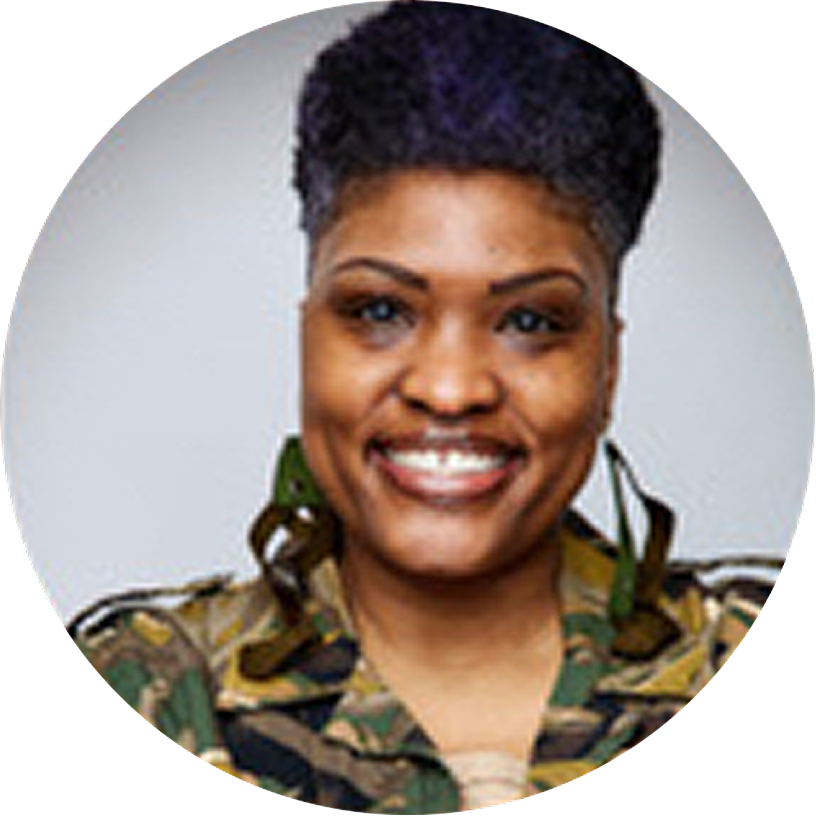
Dr. Myskeshia Mitchell
Director of the Wraparound Center – Community Based Social Emotional Learning, Peoria Public Schools (IL)
Connect on LinkedIn
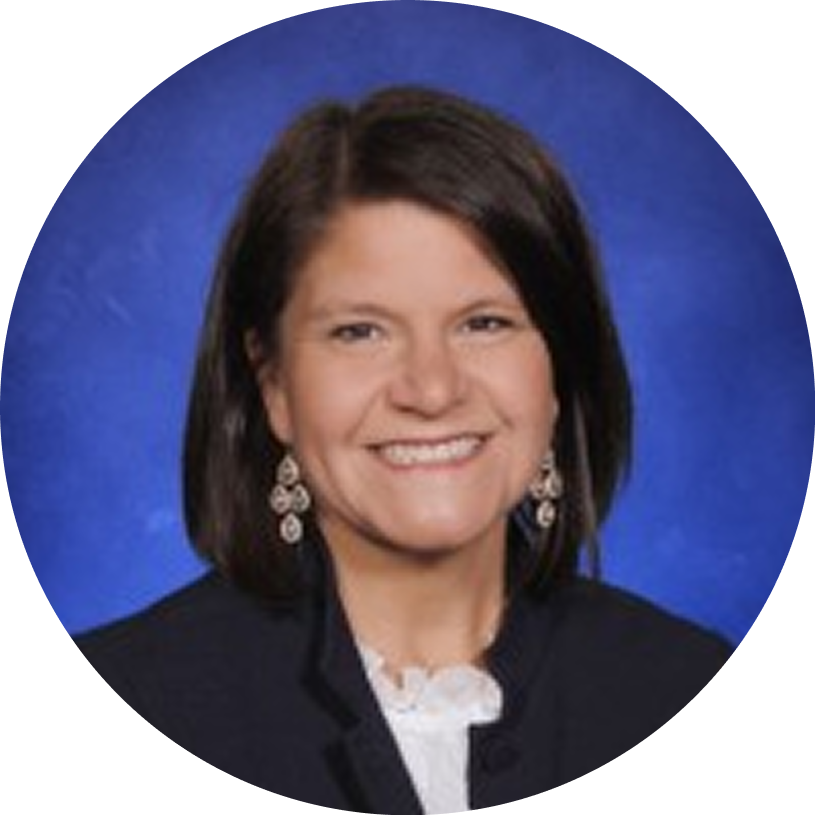
Ellen Wingard, M.Ed.
Executive Director of Student and Family Support Services, Salem Public Schools (MA)
Connect on LinkedIn

Carla Gonçalves
Director, Massachusetts School-Based Telebehavioral Health Pilot, The Brookline Center for Community Mental Health
Connect on LinkedIn
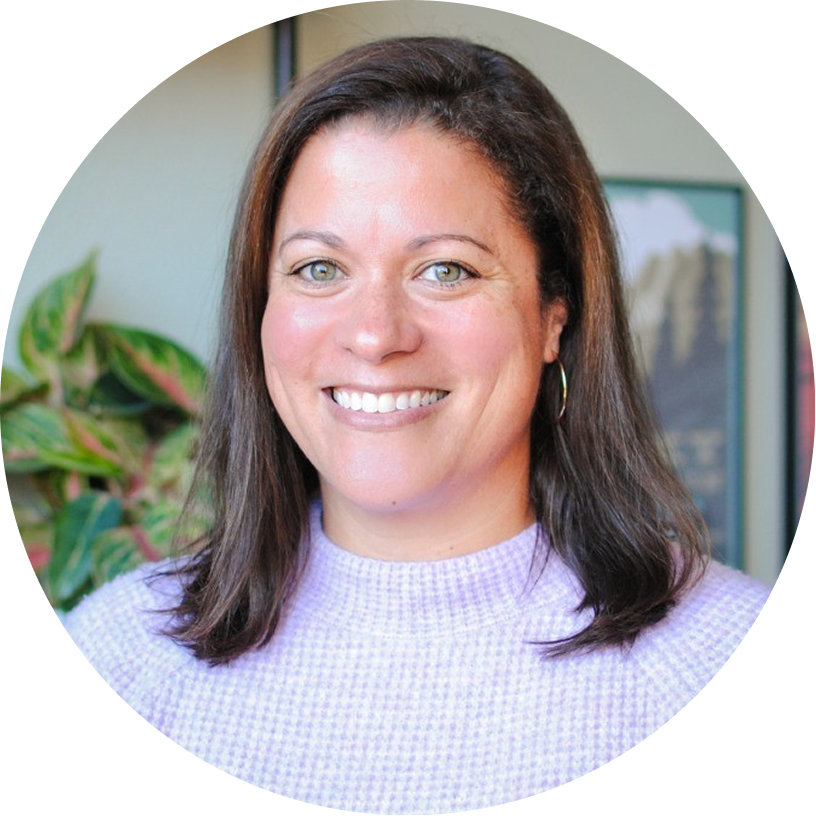
Jillian Kelton, M.Ed. (Moderator)
Director of District Engagement, Cartwheel
Connect on LinkedIn
Chronic absenteeism is solvable—but it requires addressing the mental health barriers that keep students from showing up. To learn more about how Cartwheel's School Avoidance Program can support your district's attendance goals, schedule a conversation with our team.