Case Study: Salem Public Schools
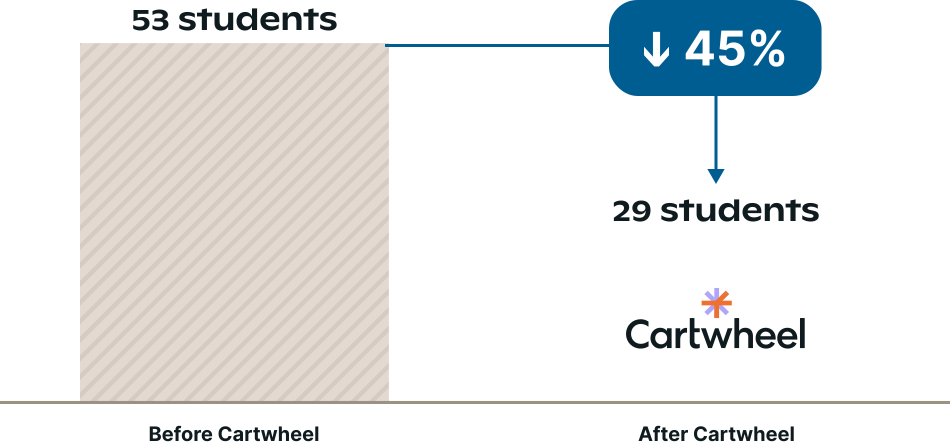
Salem Students Receiving Cartwheel Services See 45% Drop in Chronic Absenteeism

45% reduction in chronically absent students receiving care from Cartwheel

50% reduction in unexcused absence rate

64% of students with prior out-of-school suspensions had none after Cartwheel

Measurable results for students and schools
As one of Cartwheel's first district partners, Salem Public Schools recognized that many students couldn't access the mental health support they needed. Rising chronic absenteeism and behavioral incidents signaled a growing need—but systemic barriers like long waitlists, transportation challenges, and scheduling conflicts were keeping students from getting timely care.
Salem needed a partner who could expand access quickly, deliver high-quality care, integrate seamlessly with school teams, and provide data to demonstrate impact. Over four years of partnership, Cartwheel has delivered.


11 schools
Absences per Student Before vs. After Cartwheel
“Chronic absenteeism isn't just an attendance problem—it's often a mental health problem. Before Cartwheel, we were seeing the consequences of untreated mental health needs play out in our attendance data. Cartwheel helped us address those root causes—and the 45% reduction in chronically absent students shows what's possible when mental health support is accessible and integrated with schools."


What This Meant for Salem Public Schools

More Instructional
Time

Improved School
Climate

Better Resource
Allocation

Stronger Family
Engagement
Student Success Story
After completing a teletherapy program with Cartwheel, Dani's attendance improved by 32% with 21 absences (1 unexcused) the following year.

Referral
School counselor talked to Dani and mom and submitted a referral to Cartwheel

Intake
A therapist held a 1 hour intake with Dani, drafted a care plan, and sent an update to the counselor. Mom shared she did not know how to address Dani's chronic absenteeism and anxiety management.

Personalized Care
Dani started 1-1 weekly therapy sessions focused on building skills to improve mood at school and improve her ability to consistently attend school. Dani's mom also met 1-1 with the same therapist to work on strategies to support Dani. After a couple of months, Dani also began medication management through Cartwheel.

Ongoing Support
After 1 year of individual therapy, parent guidance, and psychiatry sessions, Dani's mental health improved significantly and she graduated from the Cartwheel program. Dani's attendance rate improved 32% compared to the prior year.

Why Salem Needed a Different Approach
Like districts nationwide, Salem recognized growing student mental health needs—
and the barriers families faced accessing care.

3-6 month waitlists for other providers

Transportation challenges preventing families from attending appointments

Language barriers limiting access for non-English speaking families

Overwhelmed school staff managing increasing crises with limited resources
School Avoidance Program
Students with Mental Health Needs Miss Twice as Many Days of School
Cartwheel's specialized School Avoidance Program helps students address the challenges at the root of chronic absenteeism—so they can confidently return to school.

What Makes Cartwheel Different

Specialized for school outcomes
Therapy, psychiatry, and family support focused on school avoidance, anxiety, depression, and behavioral challenges.

Rapid access to care
Students are matched with clinicians in 7–10 days instead of waiting months.

Integrated with school teams
Ongoing collaboration with counselors and social workers, shared strategies, and real-time progress updates.

Sustainable through insurance
No costs for families on Medicaid; in-network with military and commercial insurers.

Multilingual care
Students are matched with a clinician who speaks their native language.